

The Invisible Tax on the Suburban Professional
If you live in the suburbs like Arlington Heights, Libertyville, Glen Ellyn, Deerfield or Park Ridge, you likely view your commute as a necessary evil. But for the high-performer, a commute is more than an inconvenience. It is a massive leak in your personal and professional P&L. According to the U.S. Census Bureau, the average one-way commute has climbed to nearly 30 minutes. For those heading into major metropolitan hubs like Chicago, that number frequently doubles. When you factor in buffer time which is the time spent parking, walking from the station, or dealing with delays, most suburban professionals are losing 10 to 12 hours every single week.
The Physiological and Psychological Cost
It isn’t just about the minutes. It is about the Cognitive Load. A study published in the Journal of Public Economics found that a 20 minute increase in commute time is as detrimental to job satisfaction as a 19 percent pay cut. Furthermore, research from Dartmouth College suggests that long commutes are linked to increased cortisol levels and higher rates of burnout. By the time you reach your desk in a downtown high-rise, your decision capital is already depleted. You are starting your day in a state of recovery rather than a state of production.
The Compound Interest of Time
Think about what 10 hours a week looks like over the course of a year. That is over 500 hours. In 500 hours, you could learn a new language, train for a marathon, or deeply scale a new department in your business. When you commute, you are essentially paying a time tax that offers zero return on investment. High performance is about the aggressive protection of your most limited resource.
The Logic of the Bag: Why We Buy Emotion
Think about a high-end handbag. Logically, a $4,000 bag and a $40 bag perform the exact same function: they hold your keys and your wallet. There is no functional reason for the 100x price difference. Yet, people wait on lists for the $4,000 option. Why? Because we don’t buy the leather; we buy the feeling of status, the confidence of quality, and the emotion of having “arrived.” Your workday is no different. Logically, you could work from a folding chair in your garage or a cramped cubicle in the city. But the emotional toll of those choices is where the real cost lies.
Reclaiming Your Identity
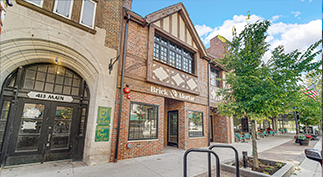
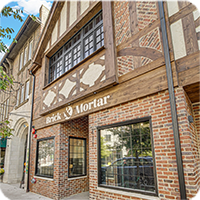
At Brick & Mortar, we believe the home of high-performance work should be close to home.
Imagine what you could do with those 500 hours. Using the first 90 minutes of your day for your hardest, most profitable task rather than a steering wheel. the physical health you could regain by reclaiming that hour for a workout or a full night of restorative sleep. Imagine the level of family presence you would achieve by being home for dinner every single night instead of just for bedtime stories. Imagine the person you become when you are no longer “The Commuter.”
When you aren’t the one always arriving late or leaving early to beat the rush. Imagine the clarity of mind that comes from having a “Home Court Advantage”—a workspace in your own community where you are known, respected, and focused.
FAQ for the Suburban Professional
How does a shorter commute impact productivity?
It reduces Switching Costs. This allows your brain to stay in a flow state rather than navigating traffic or train schedules.
Is remote work enough?
No. Working from home often replaces a physical commute with a mental commute caused by household distractions. A local professional space provides the boundary without the distance.
Your Home Court Advantage
High performance is about control. By choosing a workspace in your local community, you aren’t just booking a desk. You are buying back 500 hours a year.
Work Better. Live More.
Experience the difference of a ten minute commute. Brick & Mortar offers professional workspace in Arlington Heights, Libertyville, Glen Ellyn, Deerfield, Park Ridge and coming soon to neighborhoods in Naperville, La Grange, and Chicago’s North Center. Our spaces are designed to give you your life back without sacrificing your career trajectory. Book a Tour at your nearest B&M location today.
Sources:
- U.S. Census Bureau: American Community Survey Commuting Trends.
- Journal of Public Economics: The Relationship Between Commuting and Wellbeing.
- Dartmouth College: Department of Psychological and Brain Sciences Study on Stress.