

It is 5:30 PM. You have been at your desk for over eight hours. Your eyes are tired from the screen glare. Your inbox is technically leaner than it was this morning. You have sat through multiple Zoom calls and replied to every “urgent” Slack message that popped up. Yet, as you shut your laptop, a familiar weight settles in. You don’t feel like you conquered the day. Instead, you feel like you’ve been treading water. You’re exhausted, but can’t identify one significant accomplishment. Why You Don’t Feel Accomplished?
If you are a high performer, this is not just normal tiredness. It is a psychological gap known as Productivity Dysmorphia. This is the inability to see your own success or feel a sense of achievement regardless of how much you actually did.
To fix this, we have to look past simple time management. We have to look at how your environment is actually sabotaging your brain.
The Trap of Shallow Work
Most modern workdays are consumed by what experts define as Shallow Work. This includes non-cognitively demanding tasks like emails, scheduling, and basic logistics. These efforts provide a dangerous illusion of value. They make you feel busy, but they do not move the needle on your most important goals.
When you spend your day reacting to pings, you are paying a heavy price. Research from the University of California, Irvine, found that it takes an average of 23 minutes and 15 seconds to fully return to a task after a single interruption. If you are interrupted four times in an hour, you never actually start working. You spend the entire day in a state of “starting to start.” This constant switching drains your mental energy while leaving your most important projects untouched.
The Work From Home Ceiling
By 2026, the novelty of working from the kitchen table has completely worn off. For the serious professional, the home has become a battlefield of subtle distractions. Your home is naturally designed for comfort, family life, and rest. When you try to force high performance output into a space meant for domesticity, your brain struggles to find a flow state. The boundary between your professional identity and your personal life disappears.
This is a primary reason why you do not feel accomplished. Because you never physically or mentally left your home to go to work, you never feel like you have truly finished. You are always “half-at-work” and “half-at-home,” which leads to a permanent state of low level anxiety.
The High Cost of Cognitive Load
Every time you hear a laundry machine mid-cycle or see a dish in the sink, a small part of your brain registers a domestic task. This is called Cognitive Load. Even if you do not get up to do the laundry, your brain is still processing the fact that it needs to be done.
High performers require a “clean” mental environment to reach peak output. In a professional workspace located near your house, those domestic triggers are gone. You are free to commit 100 percent of your mental capacity to the task at hand. This is the difference between working hard and working effectively.
Presence vs. Output
Society has conditioned us to believe that presence equals productivity. We think that if we are sitting at a desk, we are working. We disagree with this entirely. True accomplishment comes from Real Output. A high performer knows that two hours of uninterrupted, focused work is worth more than eight hours of distracted “busy-ness.” To get that output, you need an environment that matches your ambition. You need a space that signals to your nervous system that it is time to perform. When you are surrounded by other people who are also focused on their best work, it creates a social contagion of discipline.
Proximity as a Performance Tool
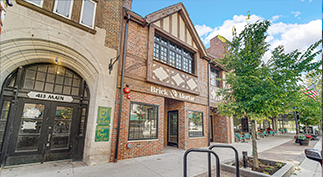
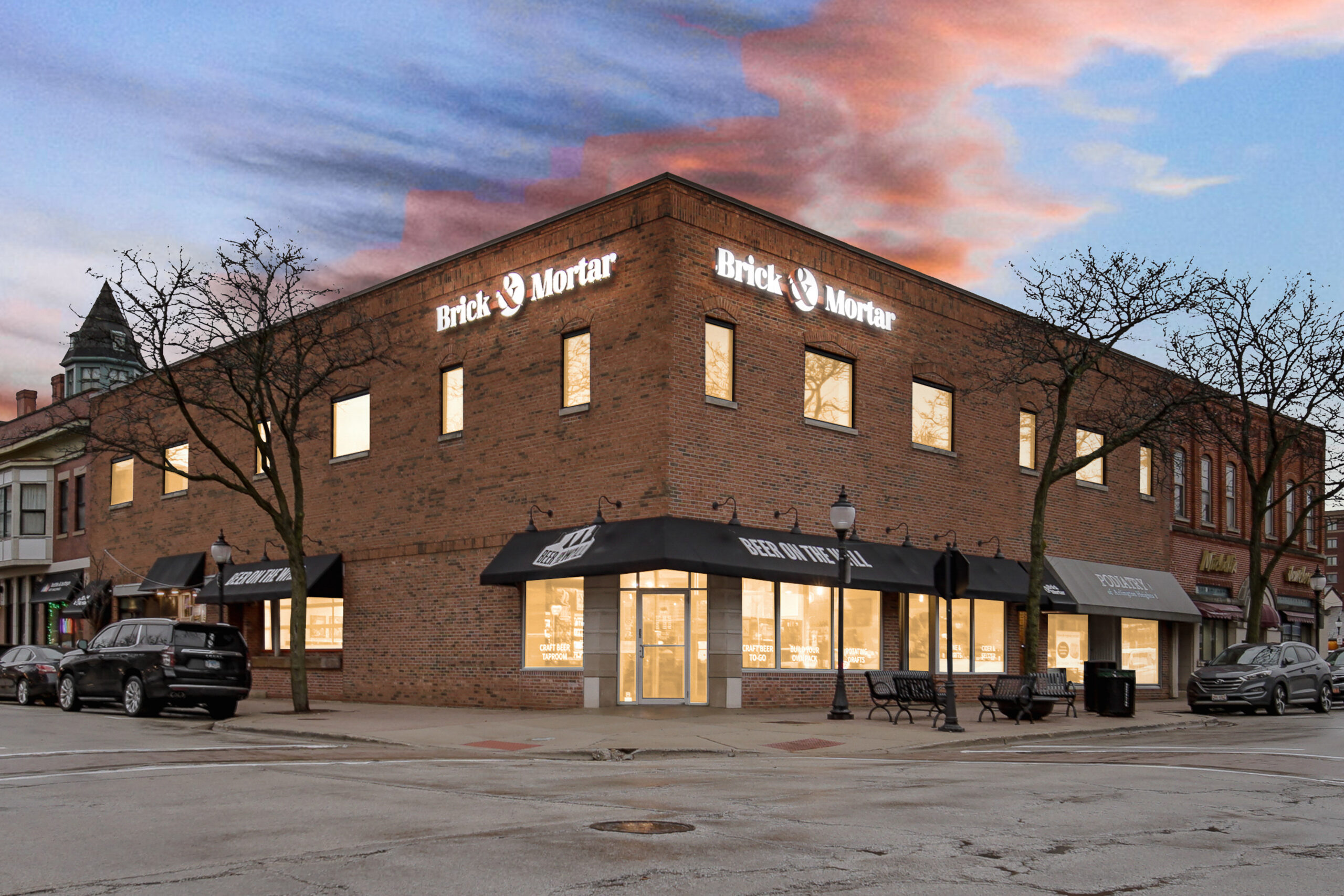
For a long time, the choice was binary. You could take a soul-crushing hour-long commute to a corporate office or you could deal with the isolation of your spare bedroom. We built Brick & Mortar to solve this problem. We provide a professional, high-design environment that is minutes from your front door.
By removing the commute, you take back hours of your life every single week. By removing the domestic distractions of the house, you consolidate your workday. When you work in a space designed for output, you do not just get more done. You finish earlier.
Comparison: How Environment Changes the Day
Consider two different Tuesdays.
On Tuesday A, you work from home. You start at 8:00 AM. You are interrupted by a delivery, a neighbor, and the temptation to check the fridge. By 6:00 PM, you have answered 50 emails but haven’t touched your main project. You feel guilty, so you keep your laptop open during dinner. You never truly “clock out.”
On Tuesday B, you walk or drive to a professional space. You put your phone away. You sit in a chair designed for focus. By 12:00 PM, you have finished your hardest task of the week. You spend the afternoon on calls and logistics. By 4:30 PM, you are done. You walk out the door and leave “Work You” behind. When you get home, you are fully present for your family.
Tuesday B is how you Win the Day.
Identity Driven Productivity
The goal is not to work more hours. The goal is to make the hours you work count for more. When you stop drifting through a day of shallow tasks and start engaging in focused, high intensity output, the feeling of accomplishment returns. You don’t just close your laptop at the end of the day; you feel the satisfaction of a mission completed.
You reclaim your evenings not because you ran out of time, but because you did the work you set out to do. This is the “Work Better, Live More” philosophy in action. It is about taking control of your time and your environment so you can be the best version of yourself in both your professional and personal life.
Taking the Next Step
If you are tired of the “busy but bored” cycle, it might be time to change your surroundings. A professional workspace is not just a desk and a chair. It is a tool for your brain. Are you ready to stop being busy and start being productive?
Schedule a tour at your closest neighborhood Brick & Mortar today. Come see what a high performance environment feels like when it is right around the corner from where you live.
Sources:
- Newport, C. (2016). Deep Work: Rules for Focused Success in a Distracted World. Grand Central Publishing.
- Mark, G. (2008). The Cost of Interrupted Work: Analysis of Work Trends. University of California, Irvine.
- Codrea-Rado, A. (2021). Productivity Dysmorphia: Why you never feel like you’ve done enough. Refinery29.