
The Casual Meeting Trap
The let’s just meet at a coffee shop culture has created a professional paradox. We want to appear approachable, but we end up appearing unprepared. When the stakes are high, such as a seed round or a final contract signing, the environment speaks before you do.
The Science of Environment on Negotiation
Environmental psychology tells us that physical surroundings significantly impact the power dynamics of a meeting. According to research cited by the Harvard Business Review, negotiators in functional professional environments achieve more collaborative and successful outcomes than those in chaotic public spaces. In a coffee shop, you are fighting for the cognitive bandwidth of your client. Every clinking cup, espresso machine blaring, and overhead song is a distraction that pulls them away from your value proposition.
The Mirroring Effect
When you invite a client to a professional space, they subconsciously mirror the level of seriousness you have provided. If you meet in a cluttered or loud environment, they may treat your proposal with the same level of transience. However, a curated board room signals that this conversation is the most important thing on your calendar.
Visual and Spatial Privacy
In 2026, data privacy and confidentiality are paramount. Discussing sensitive intellectual property or financial projections in a public space is not just unprofessional. It is a liability. You cannot control who is sitting at the next table or who can see your screen. Private meeting rooms provide a controlled environment where your data and your dialogue remain between the intended parties.
The Brick & Mortar Advantage:
To close a deal, you need to move a client from skepticism to certainty. Our spaces are engineered to facilitate that transition through three clinical layers:
1. Acoustic Boundaries (Privacy & Integrity)
Feature: Meeting rooms featuring high-STC (Sound Transmission Class) rated glass and sound-dampening design.
Benefit: While our modern design—including signature garage doors—keeps the energy high, the specific STC-rated glass ensures your conversation stays inside the room.
Emotion: Security. Your client feels safe sharing their deepest pain points because they know their sensitive data and strategy are protected by professional-grade acoustics.
2. Integrated Technology (Eliminating “Tech Shame”)
Feature: 4K displays and ultra-reliable high-speed connectivity.
Benefit: No fumbling with dongles or “can you hear me?” delays.
Emotion: Authority. When the tech “just works,” it signals that you are an expert who is in total control of your environment.
3. Professional Hospitality (The Signaling Effect)
Feature: A curated environment with on-point, front-facing lighting.
Benefit: Strategic illumination that eliminates shadows and highlights your facial expressions.
Emotion: Trust. Providing a professional sanctuary signals to your client that you value their business enough to invest in a superior experience.
The Science of the “On-Point” Face
One of the most overlooked “closing tools” is lighting. Research from the Journal of Nonverbal Behavior indicates that facial clarity is a primary driver of perceived trustworthiness. Shadows on the face—caused by harsh overhead lights or being “backlit” by a window—can subconsciously trigger “Processing Friction” in a client. According to the Journal of Environmental Psychology: Social Distraction and Cognitive Performance, if they cannot see your eyes or micro-expressions clearly, their brain spends extra energy trying to “read” you, leading to an instinctive lack of trust.
Brick & Mortar meeting rooms and phone booths are designed with professional-grade lighting that illuminates your face. This “on-point” lighting ensures your presence is commanding and your message is clear. It isn’t just about looking good; it is about removing the biological barriers to trust. Most people think about their lighting when it’s too late—they’re already on the call. Don’t be in this position.
Strategic FAQ
Why is a phone booth better for Zoom calls?
Professional backgrounds and high-speed internet prevent “Digital Friction.” Research into “Processing Fluency” shows that when a video lags or the background is cluttered, the human brain subconsciously assigns that “stiffness” to the person speaking, not the internet provider. Friction can subconsciously lower a client’s trust in your expertise. Our phone booths provide a distraction-free, professional backdrop and the connectivity you need to ensure your delivery is as smooth as your pitch. This is where professionals go when they are done with the “Busy Trap” of fixing tech and ready for real results
Can I book a meeting room on demand?
Yes. The Brick & Mortar model is built on the belief that professional needs are often immediate and should not be gated by traditional office bureaucracy. No membership is required to access our professional spaces. You can simply book a meeting room on-demand for as little as one hour, or for a full day of deep work. To ensure your high-performance routine is never interrupted, recurring meetings can be created to guarantee your space is reserved and ready whenever you are. our newest locations feature the highest grade of video conferencing capabilities to ensure that whether your client is in the room or across the globe, the connection is flawless.
Design Your Win
Do not leave your biggest deals to chance in a noisy, distraction-filled cafe. Use a space that reflects the quality of your work.
Elevate your professional standard
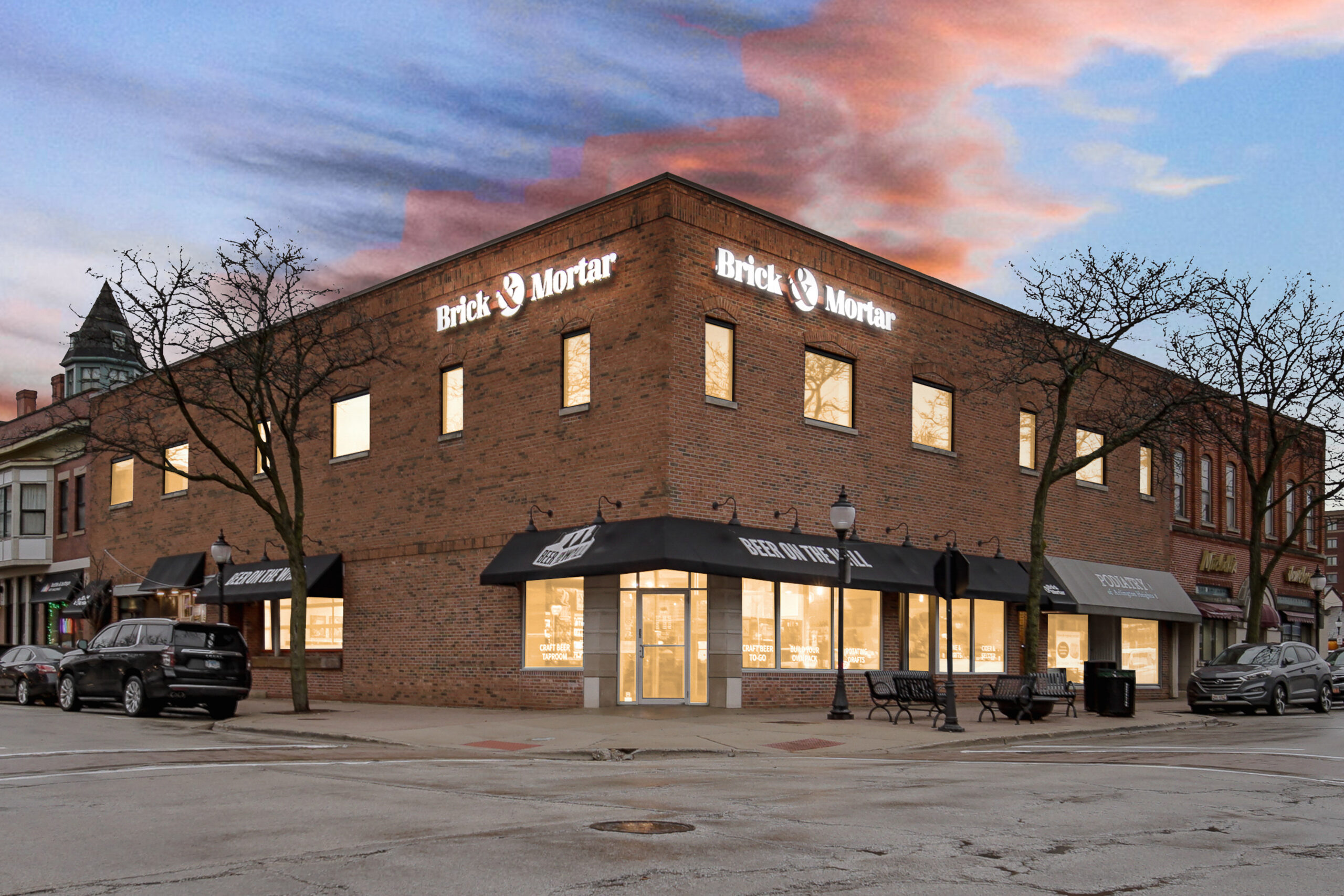
Whether you are meeting a new partner or closing a major contract, our meeting rooms in Arlington Heights, Libertyville, Glen Ellyn, Deerfield, Park Ridge and coming soon to neighborhoods in Naperville, La Grange, and Chicago’s North Center. provide the privacy and technology you need to succeed. Check meeting room availability at our locations.
Sources:
- Harvard Business Review: How the Physical Environment Influences Negotiations
- Journal of Nonverbal Behavior: The Link Between Facial Clarity and Trust.
- Journal of Environmental Psychology: Social Distraction and Cognitive Performance