

Using your home address for business can make sense when you’re just getting started.
You are building something. You are keeping expenses lean. Maybe you are consulting independently, starting an LLC, growing a small agency, selling real estate, running a contracting business, coaching clients, or finally turning a side project into a real company.
The business may not need an office yet.
But eventually, something starts to feel different.
Your home address is appearing on business correspondence. Packages are arriving at your front door. Clients know exactly where you live. The address attached to the business changes every time you move, and the company you have spent years building is still officially pointing back to your house.
That is usually when the question changes from:
Do I need an office?
to:
Does my business still need to use my home address?
Those are two very different questions.
Your business may have outgrown using your house as its headquarters even if you have absolutely no need for a traditional full-time office.
Your Business Can Grow Before Its Square Footage Does
Growth does not always look like hiring twenty employees and leasing an office building.
Sometimes it looks much quieter.
You have more clients.
Revenue is more consistent.
Your LLC has been around for a few years.
You are sending more proposals and contracts. Vendors know your company. Packages arrive regularly. Your website looks more established, your email signature looks more professional, and the business has developed an identity that is completely separate from you personally.
Then, at the bottom of all those materials, sits your home address.
For many entrepreneurs, that starts feeling like a mismatch.
A consultant may be perfectly happy working remotely.
A therapist or coach may primarily meet clients virtually.
A real estate professional is probably out of the office more than they are in it.
A contractor may spend most of the workday at jobsites.
A freelancer or small agency might work from anywhere.
None of those businesses necessarily needs a conventional headquarters.
What they may need is a professional business address that gives the company somewhere to exist outside the owner’s family home.
When Does Using Your Home Address for Business Start Becoming a Problem?
There is no universal moment when you have to stop using your home address for business.
There are, however, a few signs that the arrangement may no longer fit the company you are building.
Clients and Customers Can See Where You Live
At the beginning, this may not bother you.
As the business grows, it can start to.
Your address can appear on invoices, contracts, correspondence, registrations, marketing materials, vendor paperwork, and other documents connected to the company.
If you would rather keep your personal residence separate from your professional identity, continuing to use your home address for business can work against that boundary.
This is not about hiding your business.
It is about deciding how much of your personal life needs to be attached to it.
Your clients need a way to reach your company.
They do not necessarily need directions to your house.
Business Mail Starts Becoming Household Mail
Mail is another place where boundary lines can slowly disappear.
At first, it is one envelope.
Then it becomes client correspondence, vendor documents, statements, notices, marketing mail, packages, and everything else that comes with operating a company.
Before long, your business has taken over part of the mailbox, the front porch, and the dining room table.
Packages may be sitting outside while you are away. Important correspondence gets mixed in with household mail. Something intended for the company disappears into the same pile as catalogs, school paperwork, bills, and everything else arriving at home.
A dedicated Brick & Mortar Business Mailbox gives business mail and packages somewhere specifically designated to go.
Your company gets its own destination.
Your kitchen counter does not have to be the mailroom.
You Do Not Want Your Business Address Changing Every Time You Move
A business can outlast several homes.
Maybe you move across town.
Perhaps you rent for a few years and then buy.
Your family needs more space. Your lease ends. You relocate within the same market.
Every personal move can create another round of address updates when your home and business share the same address.
Business materials may need updating. Vendors need the new information. Client records can become outdated. Correspondence continues arriving at the old location.
A consistent business mailing address creates separation between where you happen to live and where your company receives its mail.
That distinction can become more valuable the longer the business exists.
Your home can change.
Your business does not necessarily have to change with it.
The Business Looks Established. The Address Should Too.
Professionalism is not about pretending your company is bigger than it is.
Plenty of successful businesses are run by one person.
The question is whether the infrastructure around your business reflects the quality of the product you offer, the service you provide, and the company you’re working to build and professionalize.
A professional website matters.
A company email address matters.
Clear proposals, invoices, contracts, and client communication matter.
The address attached to those things is another part of that picture.
For consultants, freelancers, coaches, real estate professionals, contractors, entrepreneurs, and small agencies, a professional business address can give the company a consistent home base without creating overhead you do not need.
You can keep the flexibility of remote work and still work from home when it makes sense.
A professional business address simply gives your company somewhere to exist outside your house, without requiring you to give up the way you already work.
A Business Mailbox Is Not the Same Thing as Renting an Office
This distinction matters.
You might not need a desk waiting for you every morning.
That does not mean you have to keep using your home address for business.
Brick & Mortar’s Business Mailbox membership is designed for exactly that space between a home-based business and a full-time office.
You get a professional address and a dedicated place for business mail and packages.
Then, when the work requires physical space, you can use it.
Need somewhere professional to meet a client? Book a Brick & Mortar Meeting Room.
Need a private place to spend the day preparing a presentation, taking confidential calls, or finishing a project? Grab a Day Pass or book an Hourly Private Office.
And if you’re curious about how your business needs may evolve as you professionalize, explore how our Private Offices could support you with full-time dedicated space.
Most days, you can continue working wherever you work best.
That is the point.
Your business can have a professional home base without forcing you back into a traditional office model.
What Can a Business Mailbox Be Used For?
A business mailbox can provide a consistent professional mailing address for business correspondence, mail, packages, and other business materials.
There is an important distinction between a business mailing address and addresses that government agencies, licensing authorities, banks, platforms, or other organizations may specifically require. The requirements can vary depending on what you are trying to do.
For example, Illinois LLC rules have separate requirements for a registered office and registered agent. A business mailbox should not automatically be assumed to replace those requirements.
Google Business Profile has its own rules too. Google generally does not allow a business that only rents a mailing address and does not actually operate from that location to use the address as its Business Profile location. Businesses operating from coworking spaces have additional requirements around staffing, signage, and receiving customers.
In other words:
A professional business address is useful for a lot of things. It is not automatically interchangeable with every address your business may ever be asked to provide.
Before using an address for a government filing, professional license, Google Business Profile, bank account, or other regulated purpose, check the specific requirements that apply.
We break down some of those distinctions further in Virtual Office vs. Business Mailbox: What’s the Difference and Why Does It Matter?.
September Is a Good Time to Look at the Business You Are Building
September has a way of shifting business conversations toward what comes next.
Q4 is approaching.
Budgets start getting discussed. Year-end goals become more immediate. Contracts come up for renewal. Businesses start planning for January before December has even arrived.
It is a useful time to look beyond what needs to get done this week and ask a bigger question:
What do I want this business to look like going into next year?
Maybe you want cleaner separation between your workday and home life.
Perhaps you want to stop publishing your personal address on professional materials.
You may be preparing to grow, add clients, hire help, formalize operations, or simply make the company feel more established.
Not every business improvement has to be dramatic.
Sometimes the next step is simply giving the business an address of its own.
Your House Does Not Have to Be the Office, Mailroom, and Headquarters
Working remotely has a lot of advantages.
Giving those up is not the goal.
The flexibility to work from home, meet a client somewhere else, spend a day in a private office, or work while traveling is part of what makes modern work useful.
The problem starts when flexibility becomes a reason your personal space has to absorb every function of the business.
Your home becomes the office.
The problem starts when flexibility becomes a reason your personal space has to absorb every function of the business.
Your home becomes the office. Soon, it is also the mailing address and package room. Eventually, it becomes the place clients associate with the company.
We explored a similar boundary in When Work Is Taking Over Your House. Work does not have to disappear from your home completely. It simply needs somewhere else to belong when home is being asked to do too much.
Your address is part of that separation.
Your Business May Have Outgrown Your Home Address
You do not need a corporate headquarters to run a legitimate business.
Remote work can still be part of how you operate, and working from home may continue to make sense some days.
But if your business is becoming more established while your home address for business is creating privacy concerns, mail problems, inconsistency, or an increasingly awkward connection between your personal and professional life, it may be time to separate the two.
Keep working wherever you want.
Let the business have an address of its own.
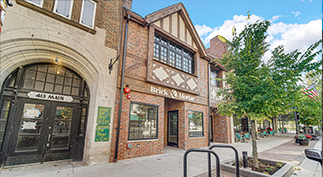
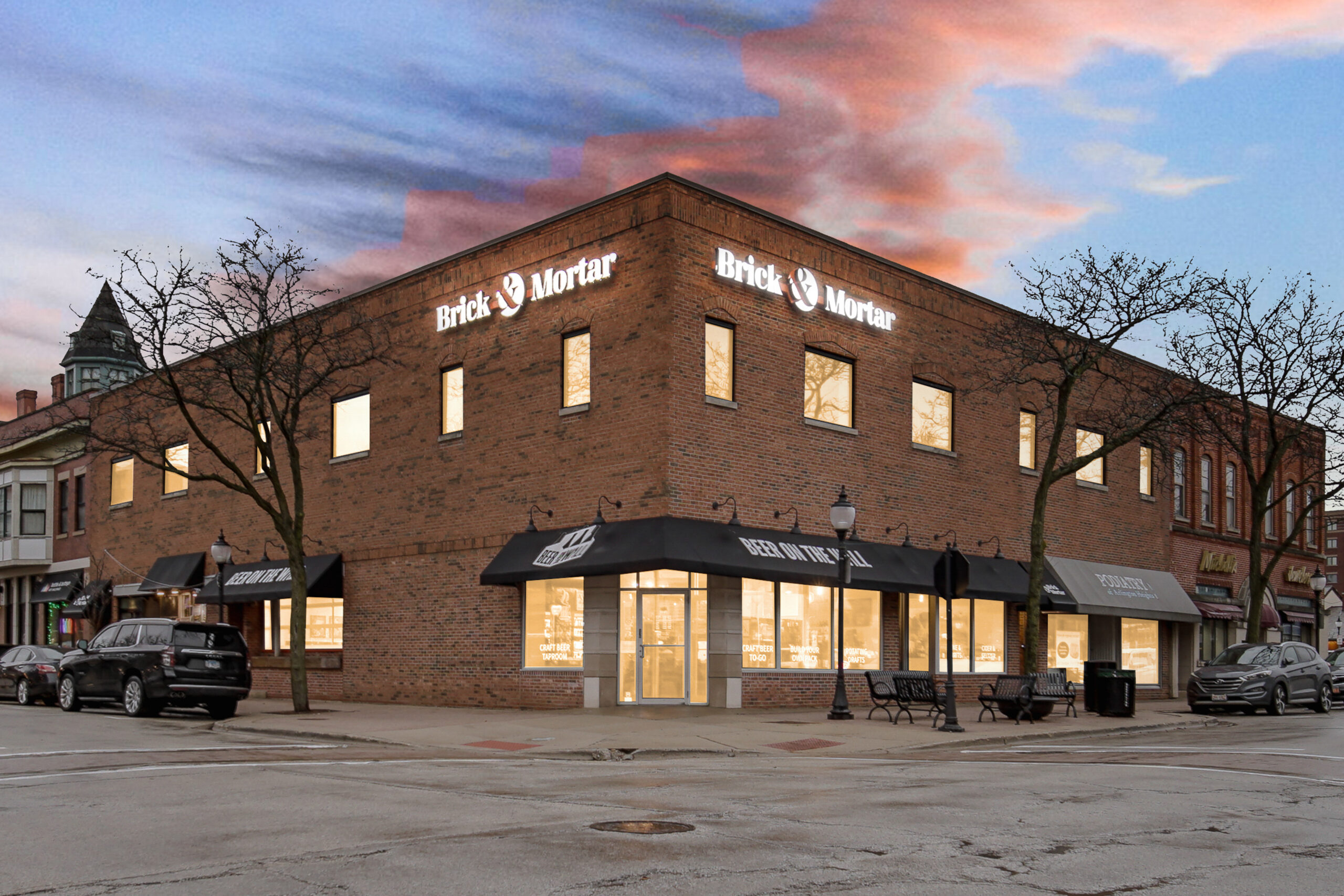
Brick & Mortar Business Mailbox memberships give entrepreneurs and remote businesses a professional home base in Arlington Heights, Libertyville, Glen Ellyn, Deerfield, and Park Ridge.
Give Your Business Somewhere to Belong
Your company may not need a full-time office.
It still deserves infrastructure that reflects where it is going next.
Ready to Get Your Business Address Out of the House?
Explore Brick & Mortar Business Mailbox Memberships and give your company a professional address with a dedicated place for business mail and packages.
Need a Private Place to Work Too?
Explore Brick & Mortar Private Offices for a dedicated workspace where you can close the door, concentrate, take calls, and build a workday around the way you actually work.
Need Somewhere Professional to Meet Clients?
Book a Brick & Mortar Meeting Room when a client consultation, presentation, interview, or business conversation deserves a professional setting.
Keep working wherever you want. Stop making your home address part of the business.
Sources
Google Business Profile, Guidelines for Representing Your Business on Google
Current guidance covering business addresses, virtual offices, coworking locations, signage, staffing, and receiving customers.
Illinois Secretary of State, Information for Forming an LLC
Illinois requirements for an LLC’s registered agent and registered office.