
A private office for Q4 gives you something that becomes increasingly valuable as the year gets busier: control over your workday. Summer is winding down, calendars are filling back up, year-end goals are getting closer, and the holidays will soon bring another layer of activity to life at home.
A private office can solve workday problems at any point in the year. Heading into Q4 simply brings several of those needs into focus at the same time.
If working from home is already costing you concentration, consistency, privacy, or a clear boundary between work and everything else, there is no reason to carry the same setup into the busiest stretch of the year.
Q4 adds enough pressure. Your workspace should remove friction, not create more of it.
Refocus After Summer Before the Year Gets Away From You
Summer has a way of loosening the workday.
Vacations break up the calendar. Teams come and go. Family schedules change, Fridays may get quieter, and routines become a little less predictable.
Then September arrives.
Projects start moving again. Clients are back. Sales targets get another look, annual planning begins, and deadlines that once felt comfortably far away suddenly have December attached to them.
This is a natural point to look at your own workday and ask a simple question: Is the way I am working helping me get where I need to go before the end of the year?
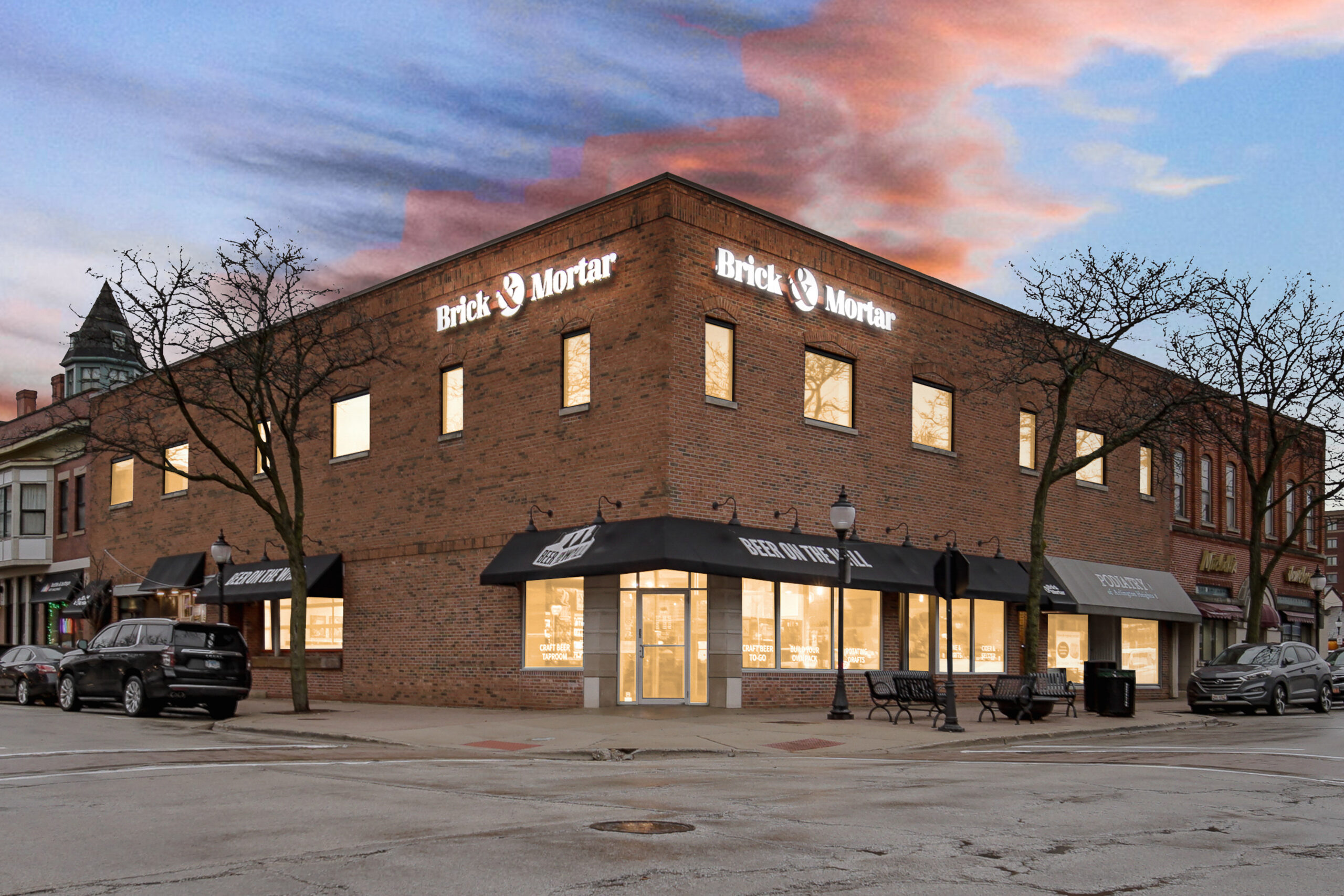
If the answer is no, a Brick & Mortar Private Office gives you a place to reset without giving up the flexibility of working close to home.
Walk in. Sit down. Close the door. Get to work.
You are not spending the first part of every morning trying to create the right conditions to focus.
The conditions are already there.
Q4 Needs More Than Good Intentions
The final quarter has a way of exposing whatever has been getting pushed aside.
A project suddenly has a real deadline. Sales goals become less theoretical. Client deliverables need to close, budgets require attention, and planning for next year begins before this year is finished.
At the same time, the modern workday is already crowded with interruptions.
Microsoft’s research into the “infinite workday” found that Microsoft 365 users in its dataset were interrupted by meetings, emails, or chats every two minutes during core work hours. Nearly half of employees surveyed also described their work as chaotic and fragmented.
Your physical workspace does not need to add another layer to that.
If you are trying to finish a proposal while monitoring everything happening at home, searching for a quiet room before a confidential call, or repeatedly getting pulled away from concentrated work, the problem may not be that you need to work harder.
The environment may be working against you.
A private office for Q4 gives your most important work somewhere protected to happen.
Protect the Hours You Already Have
Q4 does not give you more time.
It gives you more reasons to protect the time you already have.
Two uninterrupted hours can be more useful than an entire day spent bouncing between email, calls, household interruptions, notifications, and the work you actually intended to finish.
That is where having a consistent workspace starts to matter.
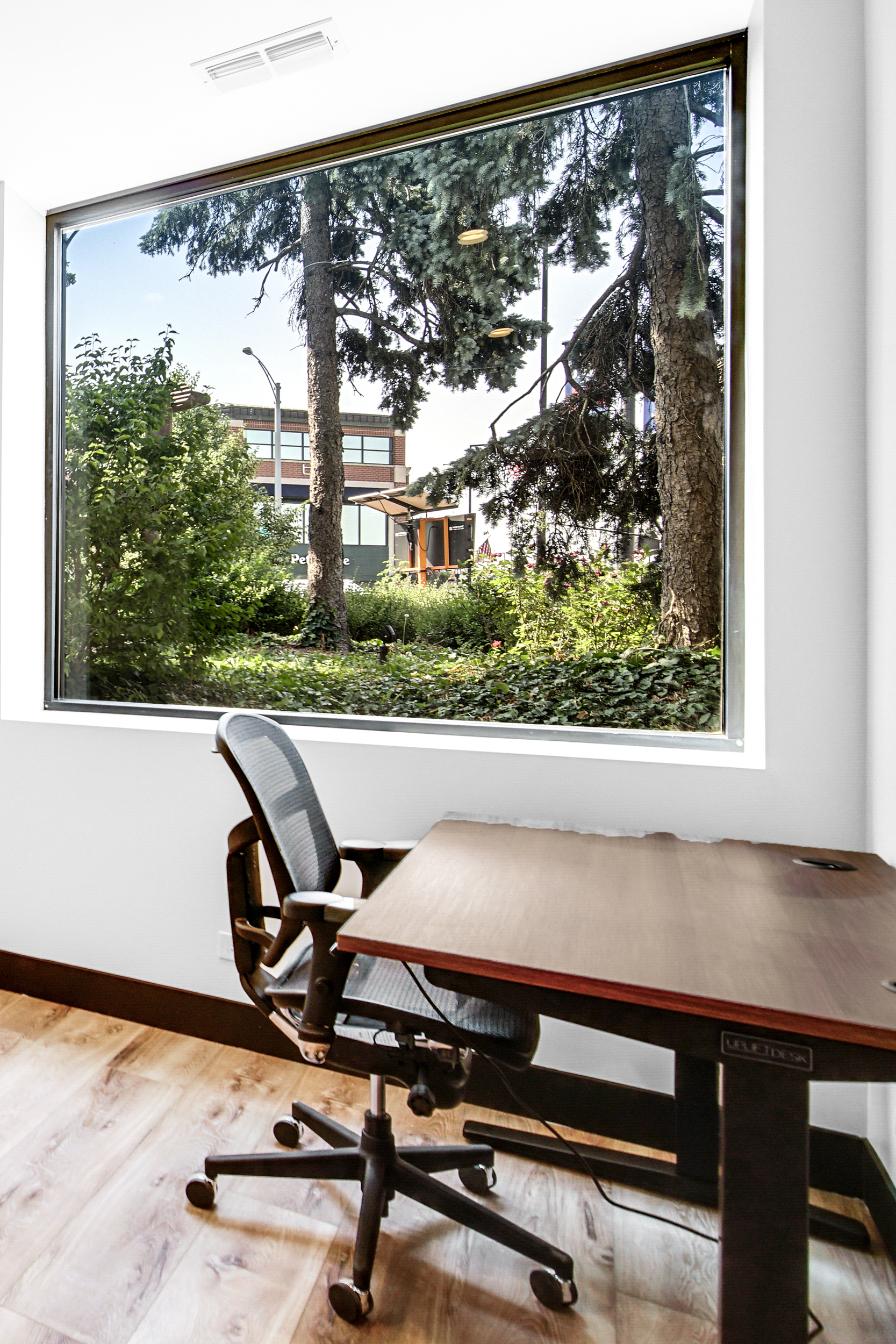
A Brick & Mortar Private Office gives you a professional space with a door you can close, high-speed fiber internet, 24/7 access, and a workspace that is already there when you arrive.
There is nothing to set up before you can begin.
You do not need to clear yesterday’s life off today’s desk.
Most importantly, you stop relying on whether home happens to cooperate with the workday you have planned.
We explored the same problem in Drifting Through Your Workday? Here’s How to Take Control. Sometimes taking back control of the day is less about fitting more into it and more about removing what keeps getting in the way.
Home Is About to Get Busier Too
Professional pressure is only one side of Q4.
Life at home is about to enter one of its busiest seasons.
October turns into November quickly. Packages start arriving, Thanksgiving plans begin, school calendars change, holiday breaks approach, travel gets added to the schedule, and December brings a long list of things happening before and after the workday.
None of those things are to blame for a decline in your productivity or output.
The challenge lies in asking the same space to function as your home office, meeting space, mailroom, guest bedroom, gift-wrapping station, and vacation-prep room all at once.
Choosing a private office for Q4 creates separation exactly when that separation becomes more useful.
Work gets somewhere to happen during the day.
Home gets to stay home when you return to it.
That boundary has value throughout the entire year, but during the holidays when personal and professional schedules both demand more attention, it can become especially meaningful.
Flexibility Should Give You More Options, Not Fewer
Getting a private office does not mean remote work failed.
Quite the opposite.
Current Gallup hybrid-work data shows that hybrid remains the dominant arrangement among U.S. employees with remote-capable jobs. As of Gallup’s May 2026 data, 52% work hybrid, 26% work exclusively remotely, and 22% work fully on-site.
Flexibility is clearly part of how professionals work now.
The question is how to use it better.
Working remotely does not have to mean working from home every day.
Home may be perfectly fine for one kind of work. A private office may make more sense when you need several uninterrupted hours, privacy for calls, or a consistent routine.
When the work requires collaboration, a Brick & Mortar Meeting Room gives your team somewhere professional to come together without maintaining a conference room all year.
That is what flexibility should look like: choosing the environment based on what the work requires.
We explored that idea further in Identity Over Infrastructure: Why Where You Work Changes How You Work.
A laptop lets you work almost anywhere.
That does not mean anywhere is always the best place to work.
Use Q4 to Build the Routine You Want in Q1
Finishing the year strong is only part of the opportunity.
Q4 also gives you time to figure out how you want to work next year before January arrives.
Every January comes with the same wave of fresh-start energy. People want to get organized, become more productive, establish better routines, and start the year focused.
The problem is that January is already busy.
You are coming back from the holidays, catching up, setting new goals, starting projects, rebuilding momentum, and dealing with everything that accumulated while people were out.
Why add “figure out how to work effectively” to that list if you can solve it now?
Research into habit formation also suggests that consistent routines take time. A 2024 systematic review published in Healthcare and available through the National Library of Medicine found that the time required for habits to form varied considerably, with repetition and stable contexts among the factors associated with stronger habits.
The research examined health-related behaviors rather than workplace routines, so there is no magic number of days for creating a better workday. The broader principle is still useful: consistency develops through repetition.
A private office for Q4 gives you October, November, and December to figure out what actually works.
Maybe mornings become your protected focus time.
Perhaps client calls work better later in the day.
You may discover that having one consistent place to start and end work makes it much easier to keep professional time from spilling into the rest of your life.
By January, you are not testing a brand-new routine.
You are continuing one you already know works.
Get the Adjustment Out of the Way Before January
There is a practical advantage to making a change before you desperately need it.
You have time to settle in.
Your workspace becomes familiar. The routine becomes easier. You learn how you prefer to structure your day without the pressure of simultaneously trying to launch a new year.
When Q1 begins, there is no need to spend the first few weeks “getting back into the swing of things.”
You already have somewhere to go.
The commute is familiar. Your desk is ready. You know when you work best, how you structure focused time, and what helps you leave work behind when the day ends.
Q4 is not the only time a private office makes sense.
But it may be the best time to establish a routine that carries into the new year. Starting now gives you time to settle into a dedicated workspace, build a productive rhythm, and figure out what works before January arrives with a full slate of new priorities.
Your Business May Need a Reset Too
For entrepreneurs, consultants, and small business owners, working from home can blur more than the workday.
The home address can slowly become the business address too.
Mail arrives there. Packages arrive there. The address ends up on business correspondence, registrations, and professional materials.
As you look toward the end of this year and the beginning of the next, it is worth asking whether that still fits the business you are building.
Brick & Mortar’s Business Mailbox membership gives your company a professional business address and somewhere to receive business mail and packages without making your home part of the operation.
Our guide, Virtual Office vs. Business Mailbox: What’s the Difference and Why Does It Matter?, explains the difference and when each option makes sense.
Your business might be ready for a professional home base. Your actual home doesn’t have to be it.
Q4 Is Busy Enough. Your Workspace Should Make It Easier.
You don’t need Q4 as an excuse to get a private office.
You need one when your current setup is making it harder to do your best work.
Q4 simply gives you more reasons to make the change now.
Refocus after summer. Protect your best working hours during the year-end push. Give yourself somewhere to concentrate while home gets busier for the holidays. Establish the routine now so January does not become another month spent trying to figure it out.
Then carry what works into Q1 and beyond.
A private office for Q4 doesn’t have to be a three-month solution.
It can be the starting point for a better work routine, one that helps you finish the year strong and enter the next one already in motion.
Take Back Your Workday
Q4 already comes with enough pressure. Take control of the part you can: where and how you work.
Need a Private Place to Get the Work Done?
Explore Brick & Mortar Private Offices and create a consistent, professional workspace where you can close the door and focus on what needs to get done.
Planning Q4 Meetings or Year-End Strategy?
Book a Brick & Mortar Meeting Room for leadership meetings, budget discussions, client presentations, annual planning, and the conversations that need everyone in the room.
Ready to Separate Your Business From Your Home?
Explore Brick & Mortar Business Mailbox Memberships and give your business a professional home base without making your home address part of the workday.
Finish Q4 with more control. Start Q1 with the routine already in place.
Sources
Gallup: Hybrid Work Indicator
Current data on how U.S. employees with remote-capable jobs divide their time among hybrid, exclusively remote, and on-site work.
Read Gallup’s Hybrid Work Indicator
Microsoft WorkLab: Breaking Down the Infinite Workday
Microsoft research examining meetings, messages, emails, interruptions, and the increasingly fragmented modern workday.
Read Microsoft’s Infinite Workday research
National Library of Medicine: Time to Form a Habit: A Systematic Review and Meta-Analysis
A 2024 systematic review examining habit formation, repetition, timing, and the role of consistent contexts.
Read the habit-formation study