
In the high-performance professional landscape, there is a pervasive and dangerous myth: that staying glued to your chair is the fastest route to results. For the modern executive or entrepreneur, the opposite is often true. Utilizing strategic breaks for productivity is not a sign of weakness or a lack of discipline; it is a tactical biological reset designed to combat the “law of diminishing returns.” At Brick & Mortar, we recognize that the ability to engage in high-intensity focus requires an equally intentional approach to disengagement.
The Neuroscience of the “Focus Plateau”
To understand why you must leave your desk, you must first understand the “Focus Plateau.” The human brain is a biological engine that consumes massive amounts of glucose and oxygen during deep work. Research into ultradian rhythms—the 90-to-120-minute cycles of brain activity—shows that after roughly two hours of intense focus, your prefrontal cortex begins to lose its edge.
When you ignore this signal and “power through,” you are effectively operating a high-performance machine on an empty tank. Your decision-making becomes sluggish, your creative problem-solving disappears, and you begin to engage in “shallow work”—tasks that keep you busy but move the needle very little. Strategic breaks for productivity are the mechanism that refills that cognitive tank, allowing you to return to your tasks with the same baseline intensity you had at the start of the day.
The “Neighborhood Reset” vs. The Home Office Trap
The effectiveness of a break is dictated by the environment in which it is taken. For those working from home, a “break” is often an illusion. Stepping into the kitchen to find a pile of dishes or hearing a delivery at the door does not reset the brain; it simply switches the type of stressor you are managing. This “context switching” is a primary driver of modern burnout.
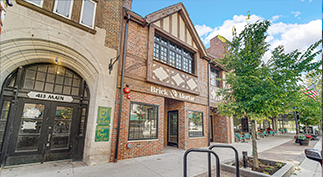
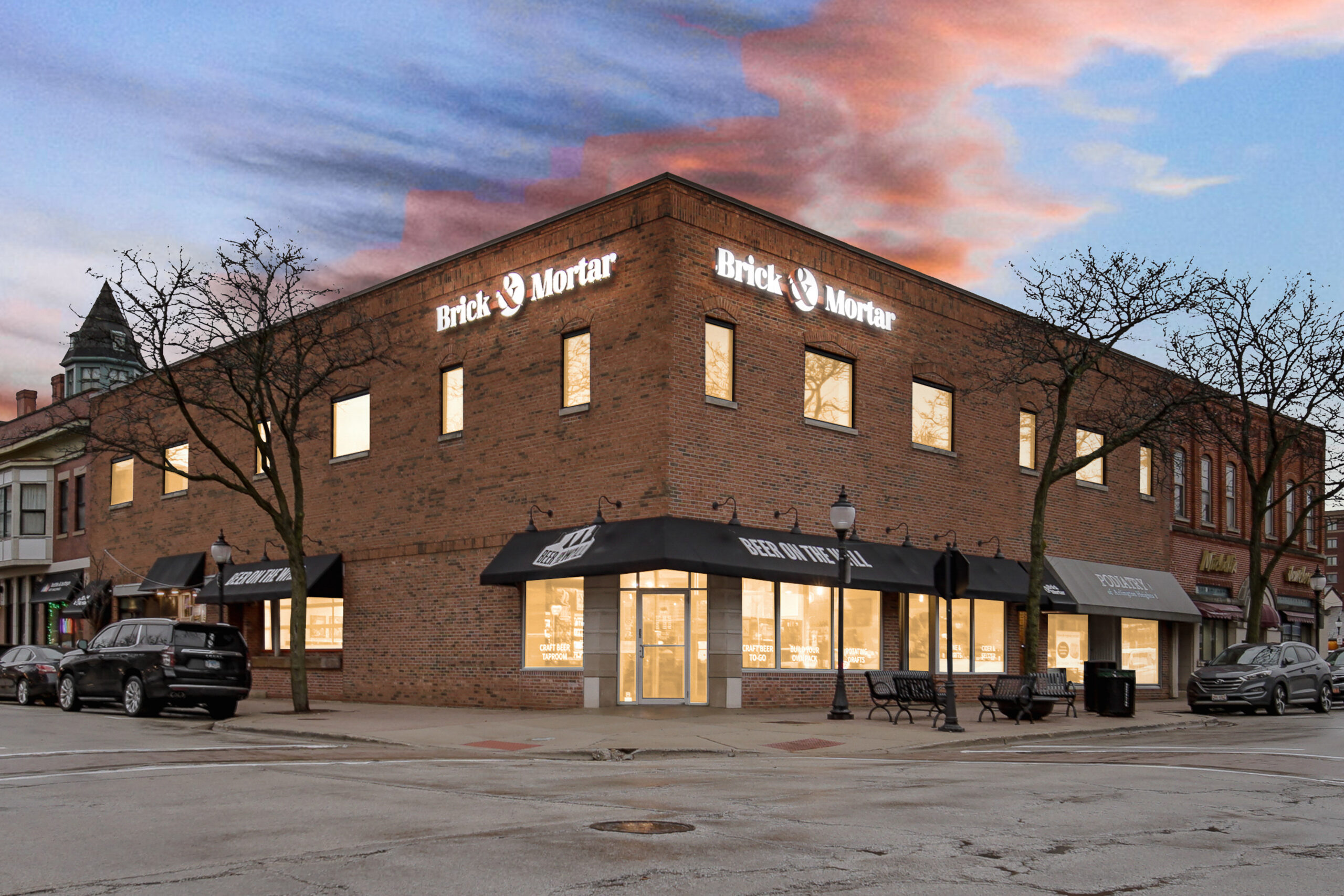
Brick & Mortar locations are specifically designed to facilitate the “Neighborhood Reset.” By moving your professional life into a dedicated neighborhood office, you gain access to an ecosystem that supports both high-output work and high-quality recovery. Whether you are working out of our locations in Arlington Heights, Deerfield, Glen Ellyn, Libertyville, or Park Ridge, the surrounding neighborhood becomes an extension of your office.
- Sensory Shifting: Leaving your desk to walk through a vibrant neighborhood center provides “soft fascination”—a state where the brain can recover its directed attention by focusing on low-stakes environmental stimuli.
- The Power of Proximity: Because our offices are embedded in the heart of local communities, a five-minute walk puts you in a completely different sensory environment, breaking the “monotony of the screen.”
Three Critical Signs You Need to Walk Away
A high-performer knows how to read their own biological dashboard. If you encounter these three “red line” indicators, your productivity is already declining:
- The Cognitive Loop: You find yourself reading the same sentence or looking at the same spreadsheet cell for five minutes without any new insight. Your brain has entered a “loop” state where it can no longer synthesize information.
- Involuntary Distraction: If you find yourself reflexively opening social media or news tabs every few minutes, it is not a lack of willpower. It is your brain’s desperate attempt to find a “dopamine reset” because it can no longer sustain the current task.
- The “Creative Wall”: You are attempting to solve a problem but keep coming back to the same failed solution. You are stuck in “focused mode,” and you need to enter “diffuse mode”—which only happens when you physically move away from your workspace.
The Strategic Break Framework: 90/15
At Brick & Mortar, we encourage our members to adopt the 90/15 Framework. This involves 90 minutes of “monotastic” deep work followed by a 15-minute strategic break.
- The 90 (Focus): Phone away, notifications off, 24/7 access utilized to ensure zero interruptions from gatekeepers or domestic noise.
- The 15 (Recovery): A physical departure from the desk. This is where the neighborhood office shines. A quick walk to a local Arlington Heights or Libertyville coffee shop, a breath of fresh air in Deerfield, or a short stroll in Park Ridge or Glen Ellyn provides the physiological shift necessary to reset your nervous system.
24/7 Autonomy and the Rhythmic Workday
A significant barrier to strategic breaks for productivity is the rigid 9-to-5 schedule. Traditional offices often foster a “culture of presence,” where leaving your desk is viewed with suspicion. Brick & Mortar has eliminated this friction.
Our seamless, 24/7 entry system across Arlington Heights, Deerfield, Glen Ellyn, Libertyville, and Park Ridge means you own your schedule. If your peak productivity occurs in the early morning, you can work a high-intensity block, take a two-hour mid-day reset to handle personal needs or exercise in the neighborhood, and return when your energy is highest. We provide the infrastructure; you provide the rhythm.
Reclaiming Social Capital in Your Neighborhood
Isolation is a productivity killer. While the goal of a break is to reset focus, a “micro-interaction” with another human can actually boost cognitive function. Working near home in a Brick & Mortar environment allows for “low-stakes social capital.” A brief greeting with a fellow professional or a quick interaction with a local business owner during your walk provides a sense of belonging that high-rise offices and home offices simply cannot replicate.
This sense of community—without the forced “networking” events of generic coworking spaces—creates a supportive background for your best work. You aren’t just a tenant; you are part of a neighborhood of high-performers.
Conclusion: Focus is a Finite Resource
Brick & Mortar is the solution for the professional who is tired of the grind and ready for performance. By choosing a neighborhood office that prioritizes your ability to both focus and recover, you are investing in the longevity of your career.
Don’t wait until you are burnt out to leave your desk. Build a workday based on the science of recovery. Get out of the house, get out of the traffic, and get into a space where work actually works.
Ready to reclaim your focus? Fix Your Workday – Schedule a Tour at Brick & Mortar.
Sources & Research Guide
- The Science of Ultradian Rhythms: Loehr, J., & Schwartz, T. (2003). The Power of Full Engagement. Research detailing how 90-minute intervals of work maximize energy and output.
- Attention Restoration Theory (ART): Kaplan, S. (1995). The restorative benefits of nature: Toward an integrative framework. Journal of Environmental Psychology. Explains how neighborhood environments (soft fascination) restore directed attention.
- Context Switching and Productivity: American Psychological Association (APA). Multitasking: Switching Costs. Data showing that even minor domestic interruptions can cost 40% of productive capacity.
- Movement and Creativity: Stanford University (2014). Stanford study finds walking improves creativity. A study confirming that creative thinking improves by an average of 60% during and after walking.
- The Biology of Focus: Dr. Andrew Huberman, Huberman Lab Podcast: Focus Toolkit. Insights into how physical movement and “panoramic vision” (looking at horizons or neighborhood environments) resets the nervous system for better concentration.