

It is 6:15 PM. You closed your laptop twenty minutes ago, but you are still standing in the kitchen replaying that one afternoon email. Your body is home. Your head is still at work.
When your office is the spare bedroom, there is no line between “on” and “off.” You do not clock out. You drift from the desk to the dinner table, still carrying the day with you.
For decades, the commute did that job. The drive, the train, the walk from the parking lot: that in-between time was where you shed the workday. Remote work deleted the commute and, with it, the ritual that told your brain the workday was done.
The good news? You do not need the two-hour slog of fighting rush-hour traffic to get the boundary back. You just need a reason to walk out one door and into another.
The Problem With a Zero-Second Commute
Working from home was supposed to give you time back. Instead, it quietly stretched the day. When millions of people went remote, researchers tracking real email and calendar data found the average workday grew by 48.5 minutes, with more messages sent after hours and the line between work and life blurring completely.
The issue is not the hours. It is the lack of a distinctive ending. Psychologists call the ability to mentally clock out “psychological detachment.” In a study that followed 309 workers over a full year, those who could switch off after work reported lower emotional exhaustion twelve months later, without being any less engaged, productive, or successful on the job. Detachment is not laziness. It is maintenance.
The catch: detachment is hardest exactly when you need it most. The high-pressure days are the ones that follow you home. Without a physical transition, there is nothing to break the loop.
Your Brain Runs on Thresholds
There is a reason the commute mattered. Harvard researchers who studied thousands of commuters describe the trip to and from work as a “liminal” role transition: a buffer where you step out of “home you” and into “work you,” then back again. That in-between space is where the switch actually flips.
Delete the transition and the roles collapse into each other. The kitchen is the conference room. The couch is the inbox. Every space becomes every role, and none of them get a clean start or a clean finish.
Walking from your home to a dedicated workspace rebuilds that threshold. You leave the house as “home you.” By the time you arrive, you are ready to work. And on the way back, you get the exit ritual that remote work took away.
Why the Walk Itself Does the Work
The walk is not just symbolic. Movement changes your head. A Stanford study found that walking increased a person’s creative output by an average of 60% compared with sitting, and the boost lingered even after people sat back down.
So the short walk to your workspace is doing two jobs at once. It draws the boundary between home and work, and it primes you to think more clearly once you arrive. The walk home does the reverse: it lets the day’s tension drain before you reach your front door.
You do not need to script it to the minute. Everyone’s route is different. Even a brief walk — just a few blocks or around ten minutes — is enough to signal to your brain that one part of the day is closing and another is beginning.
The Brick & Mortar Advantage
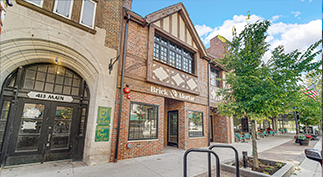
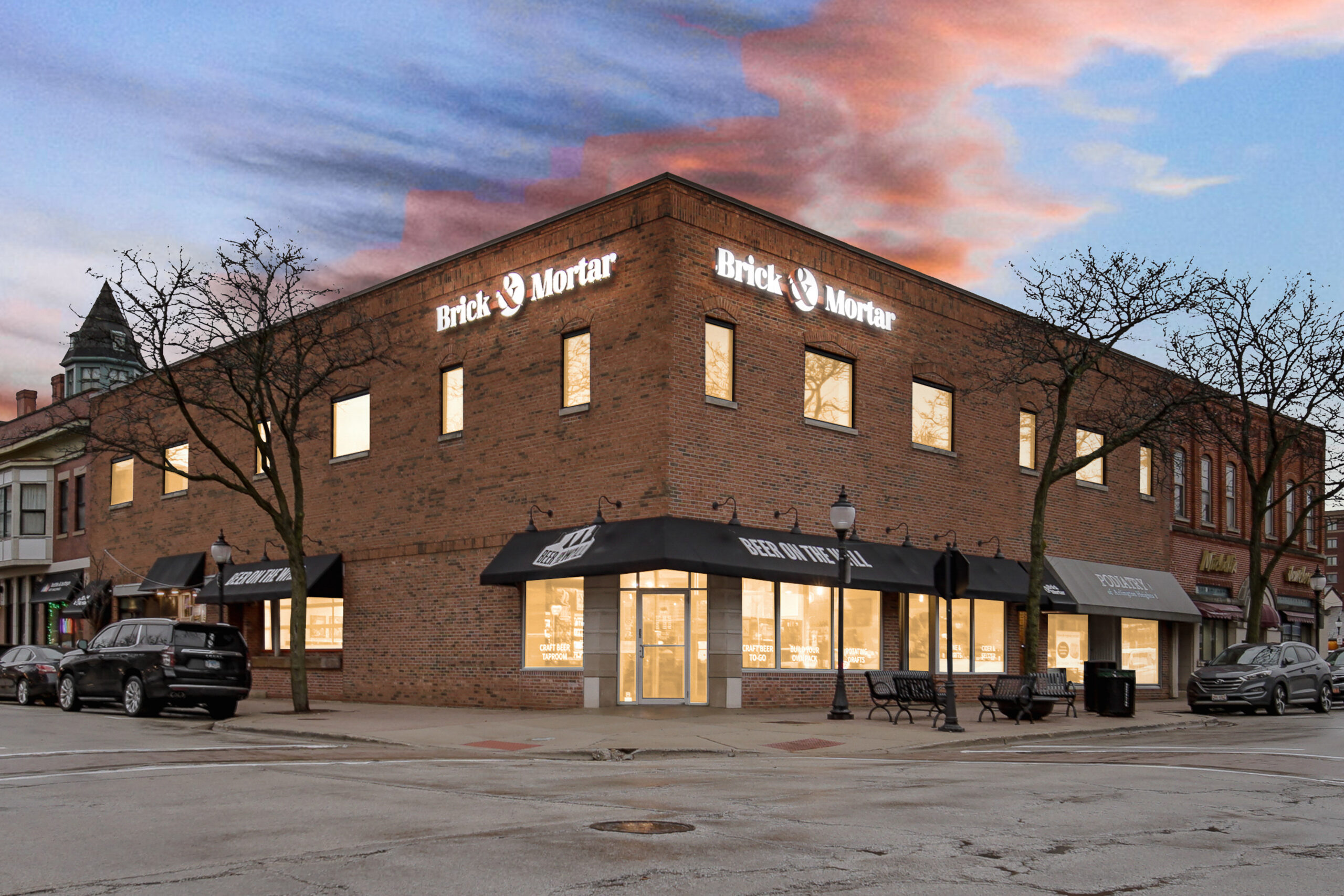
This is exactly why a neighborhood workspace beats both the home office and the far-off downtown tower. Brick & Mortar locations sit in the communities where you already live, so your “commute” is a short, restorative walk, not a soul-draining haul.
When you arrive, Kisi keyless entry lets you simply wave your phone near the reader and head inside — no fumbling for keys, no waiting for a receptionist to return from their bathroom break, just secure 24/7 access. Duck into a Focus Station for heads-down work, or book a few hours in a Work Booth when you need a quiet space for an important call. There is no membership required: book by the hour or the day, or set a recurring reservation that fits your rhythm.
The result is a real “there” to go to and, just as importantly, a real “there” to leave. Your home goes back to being your home.
How to Build Your Own Boundary Walk
- Pick a workspace close enough to walk to, but far enough that the trip feels like a real transition.
- Use the walk out to plan your first task, and the walk back to mentally close the day.
- Leave the laptop bag zipped until you arrive. The walk is not work time.
- Keep it consistent. The ritual works because your brain learns the pattern.
Fix your environment, and your work will follow.
Fix your environment, and your work will follow.
Our Locations:
Get out of the house. Get into Brick & Mortar.
Schedule a tour at your closest neighborhood Brick & Mortar
Sources:
- Oppezzo, M. & Schwartz, D. (2014). “Give Your Ideas Some Legs: The Positive Effect of Walking on Creative Thinking.” Journal of Experimental Psychology; Stanford University.
- Jachimowicz, J. et al. (2021). “Between Home and Work: Commuting as an Opportunity for Role Transitions.” Organization Science.
- DeFilippis, E. et al. (2020). “Collaborating During Coronavirus: The Impact of COVID-19 on the Nature of Work.” NBER Working Paper 27612.
- Sonnentag, S. (2012). “Psychological Detachment From Work During Leisure Time.” Current Directions in Psychological Science.